Artificial Intelligence
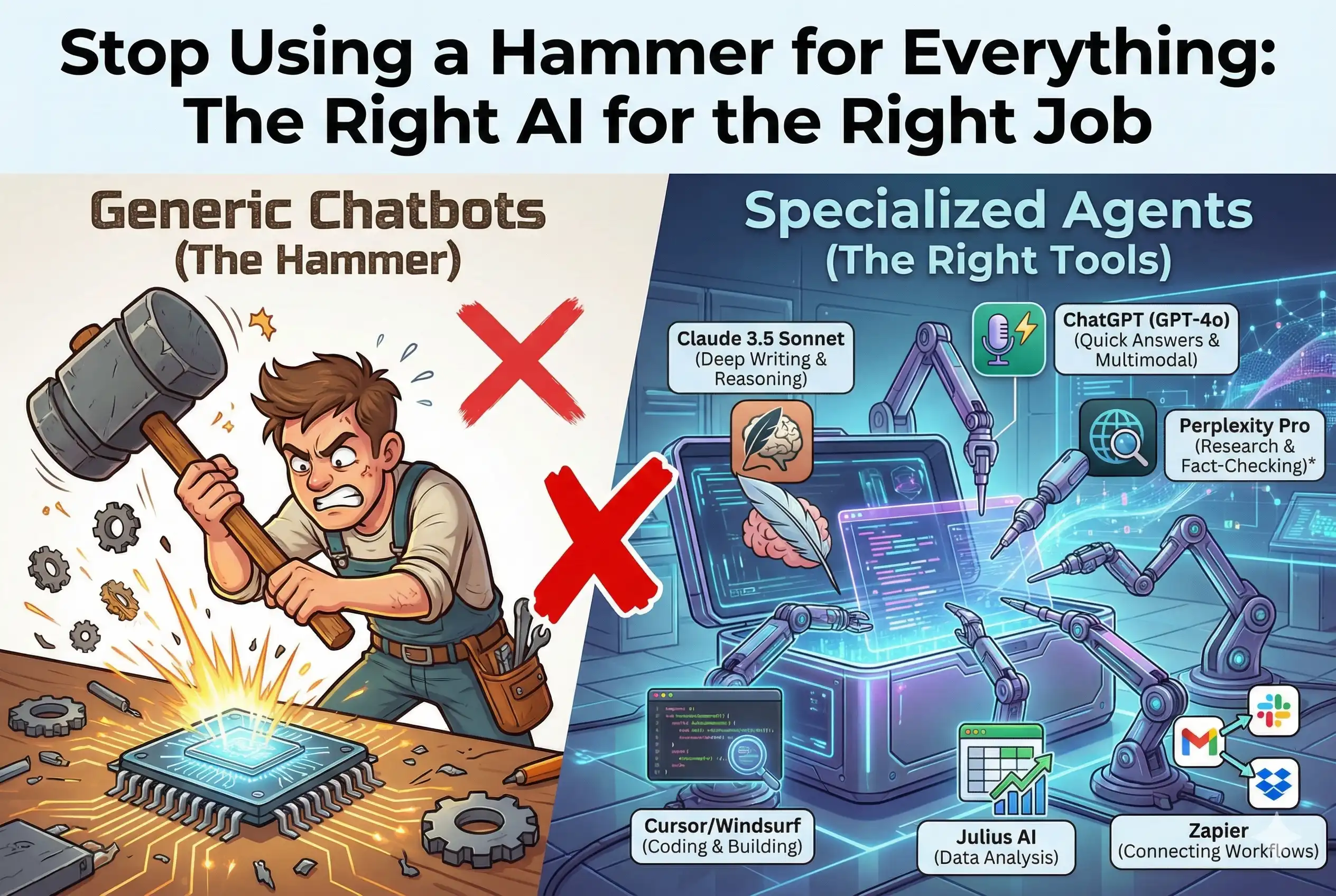
Claude Fable 5, Mythos 5, and the State of the Claude Ecosystem in Mid-2026
On June 9, 2026, Anthropic broke its own naming convention for the first time since Claude 3: <strong>Claude Fable 5</strong> is a new "Mythos-class" tier above Opus, generally available at $10/$50 per million tokens, with a sibling — <strong>Claude Mythos 5</strong> — reserved for vetted cyberdefenders with some safeguards lifted.<br/><br/>This post does two things. First, it explains what Fable 5 and Mythos 5 actually are: the capability claims, the safeguard architecture (high-risk queries silently fall back to Opus 4.8), and what changes for you at the API level. Second, it maps the verified timeline that got us here — Opus 4.5 (Nov 2025), Sonnet 4.6 (Feb 2026), Opus 4.8 (May 2026), Claude Cowork (Jan 2026), Claude in PowerPoint (Feb 2026) — plus the agent stack (Claude Code, Agent SDK, Skills, MCP) that all of it runs on.<br/><br/>There's also a meta-lesson: this post started as a research doc in which half of these products were flagged as "probably hallucinated" because they broke known patterns. Every one of them turned out to be real. The takeaway for engineers working with LLMs is at the end.
Read More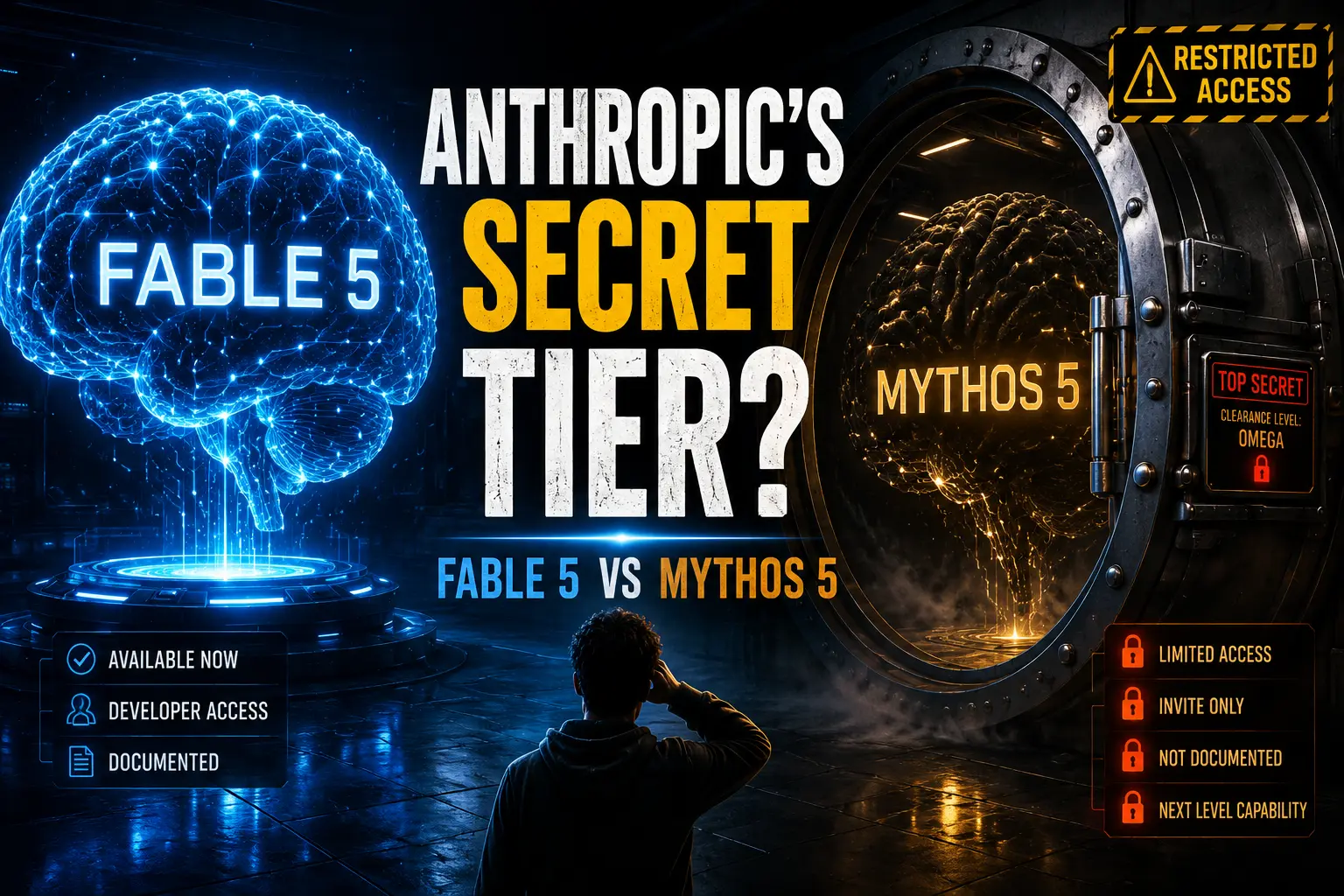
The Definitive Claude Code Playbook (June 2026 Edition)
Most engineers install Claude Code, prompt it like a chatbot, and wonder why it's inconsistent. The answer isn't a better prompt — it's infrastructure.<br/><br/>The real gains come from three things: a <code>CLAUDE.md</code> that actually enforces your standards, a fleet of parallel agents in git worktrees instead of one babysit session, and hooks plus sub-agents that handle the tedious parts automatically.<br/><br/>The 2025–2026 story is that Claude Code became a <strong>platform</strong>: 8-event hooks, the renamed Claude Agent SDK, <code>claude-code-action</code> for GitHub, and <code>--dangerously-skip-permissions</code> — great when sandboxed, genuinely dangerous when not. Yes, people have deleted their <code>.git</code> folders with it.<br/><br/>Highest-ROI moves for senior engineers, in order: (1) a real <code>CLAUDE.md</code> with DO-NOT rules, (2) a <code>.claude/commands/</code> stdlib, (3) PostToolUse formatter + Stop test hooks, (4) code-reviewer and security-auditor sub-agents, (5) 3–8 parallel agents on worktrees.
Read More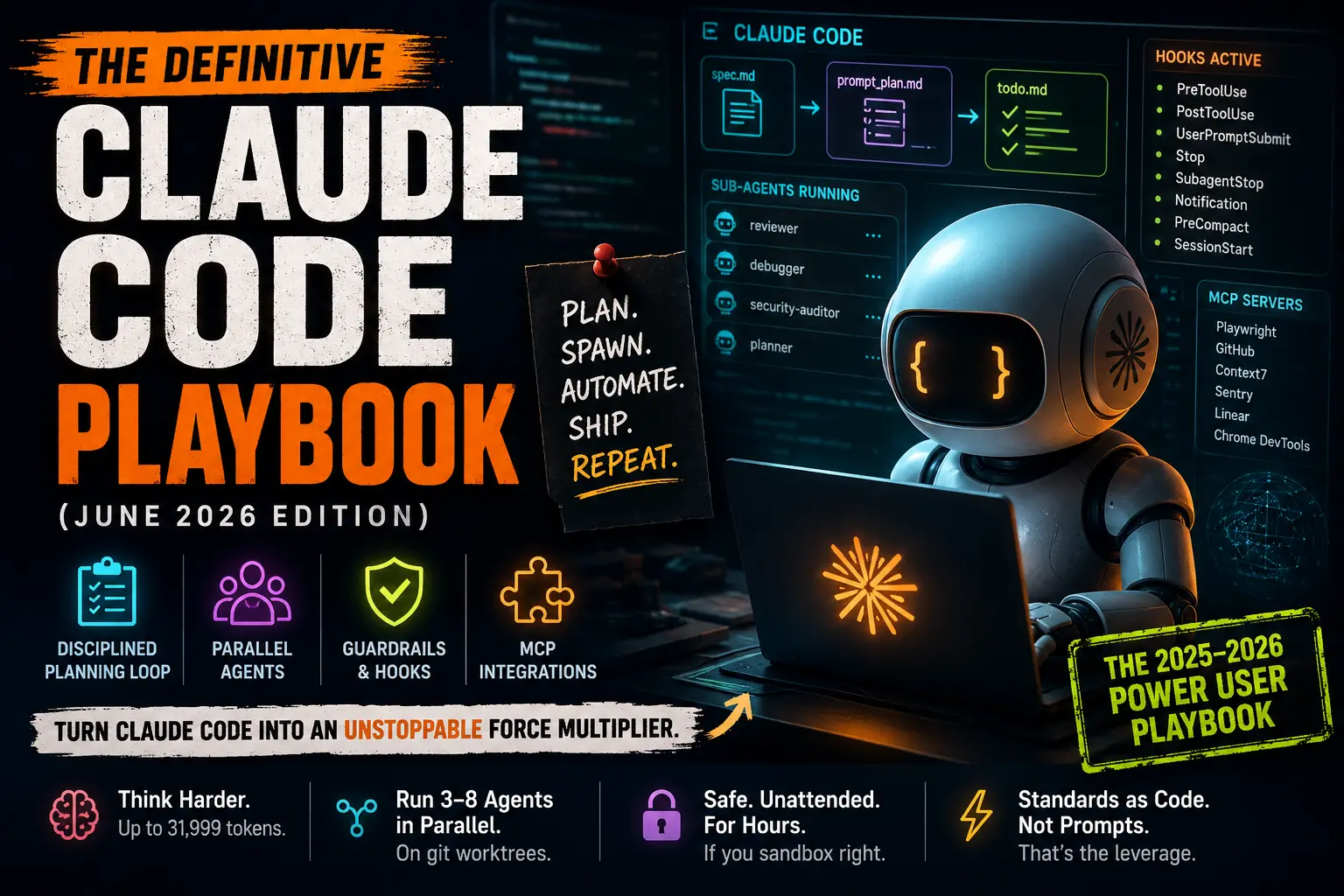
Vectorless RAG: You Probably Don't Need a Vector Database
Everyone building AI features in 2026 seems to follow the same recipe: chunk your documents, push them through an embedding model, store vectors in Pinecone or Weaviate, and call it RAG. But the vector database is often the most expensive, fragile part of the stack — and you don't actually need it. Vectorless RAG is a family of retrieval approaches (BM25, PageIndex, knowledge graphs, text-to-SQL, agentic keyword search) that ground LLM answers in real documents without dense embeddings or approximate nearest-neighbour search. This deep dive covers when to skip the vector stack, the five core vectorless approaches with production Rails code, and the honest trade-offs based on the latest 2025–2026 research.
Read More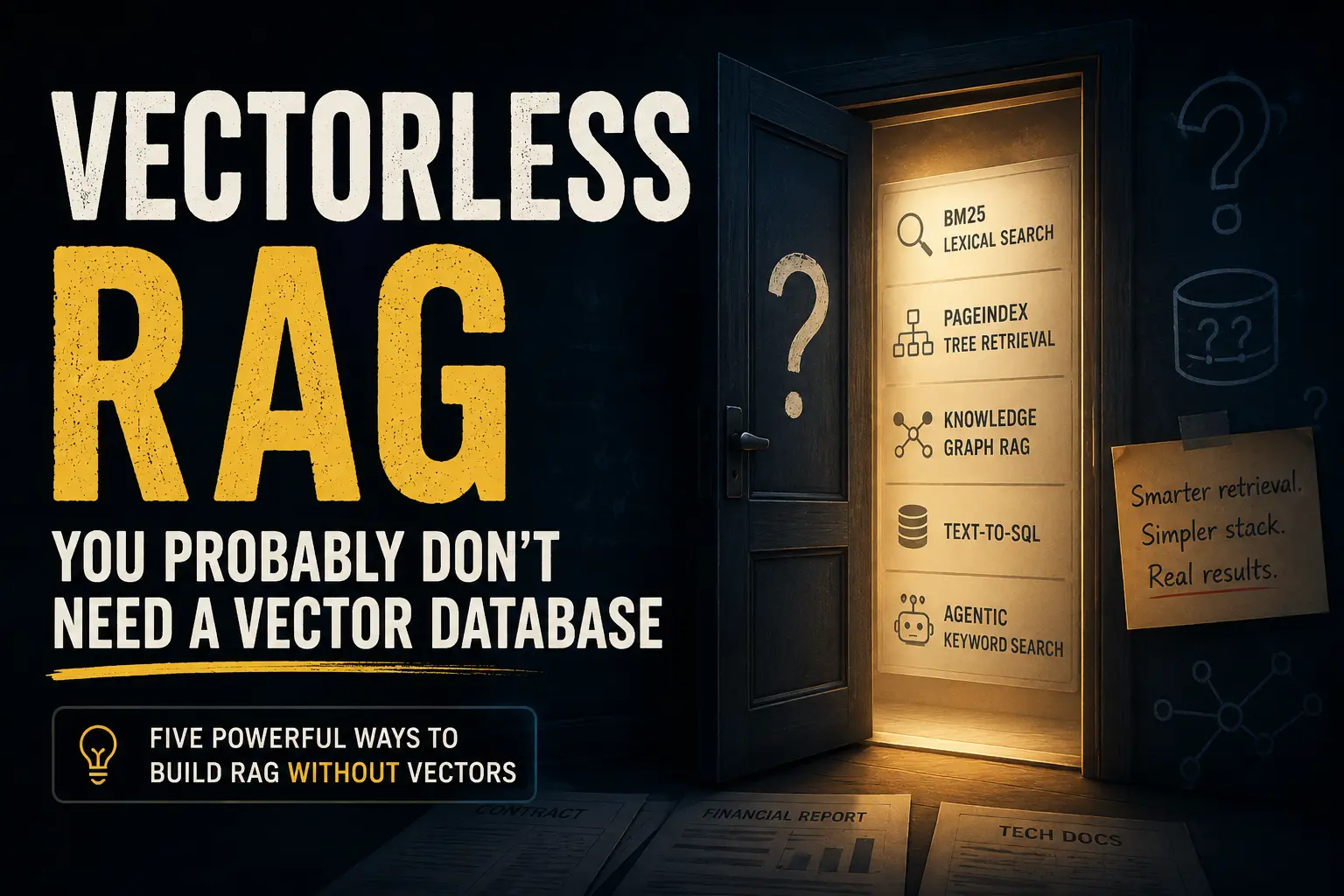
Stop Asking Your AI to Do Everything: A Practical Guide to Multi-Agent Workflows
Expecting a single model to act as researcher, architect, execution engineer, and QA reviewer leads to context rot. The solution is cognitive decomposition: break the software development lifecycle into specialized agents—Research, Planning & Refinement, Execution, and Review—each restricted to a single cognitive task, with predictable handoff protocols and drop-in Markdown specs for Cursor, Claude Code, and Antigravity.
Read More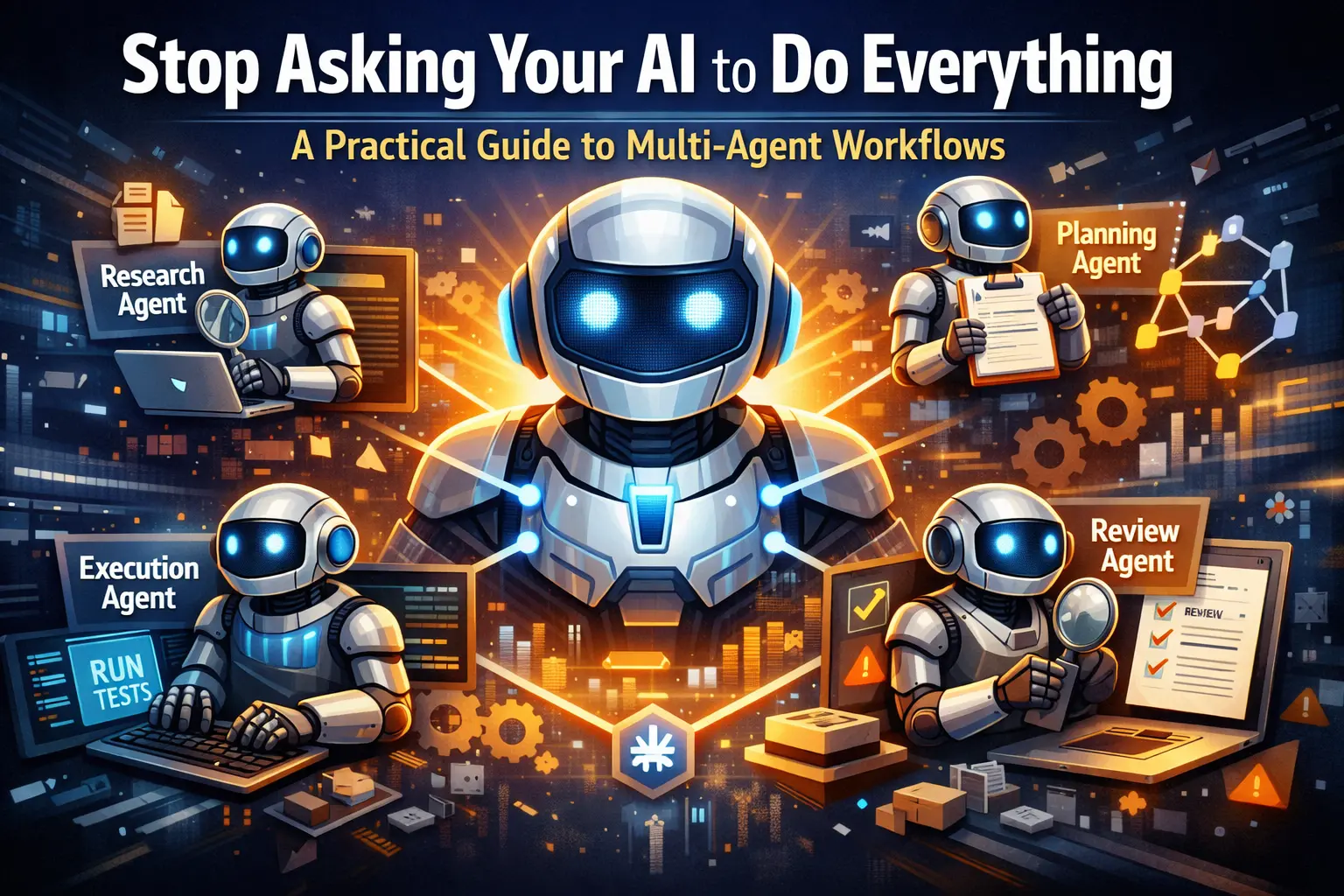
Building the Future: A Developer's Guide to Agentic AI Workflows in Ruby
We are crossing the threshold into "System 2" AI: agentic workflows. For Ruby and Rails developers, this means moving from stateless chat to orchestrating autonomous agents that plan, reason, and execute. This guide covers tools vs skills, MCP, multi-agent pipelines, and production infrastructure.
Read More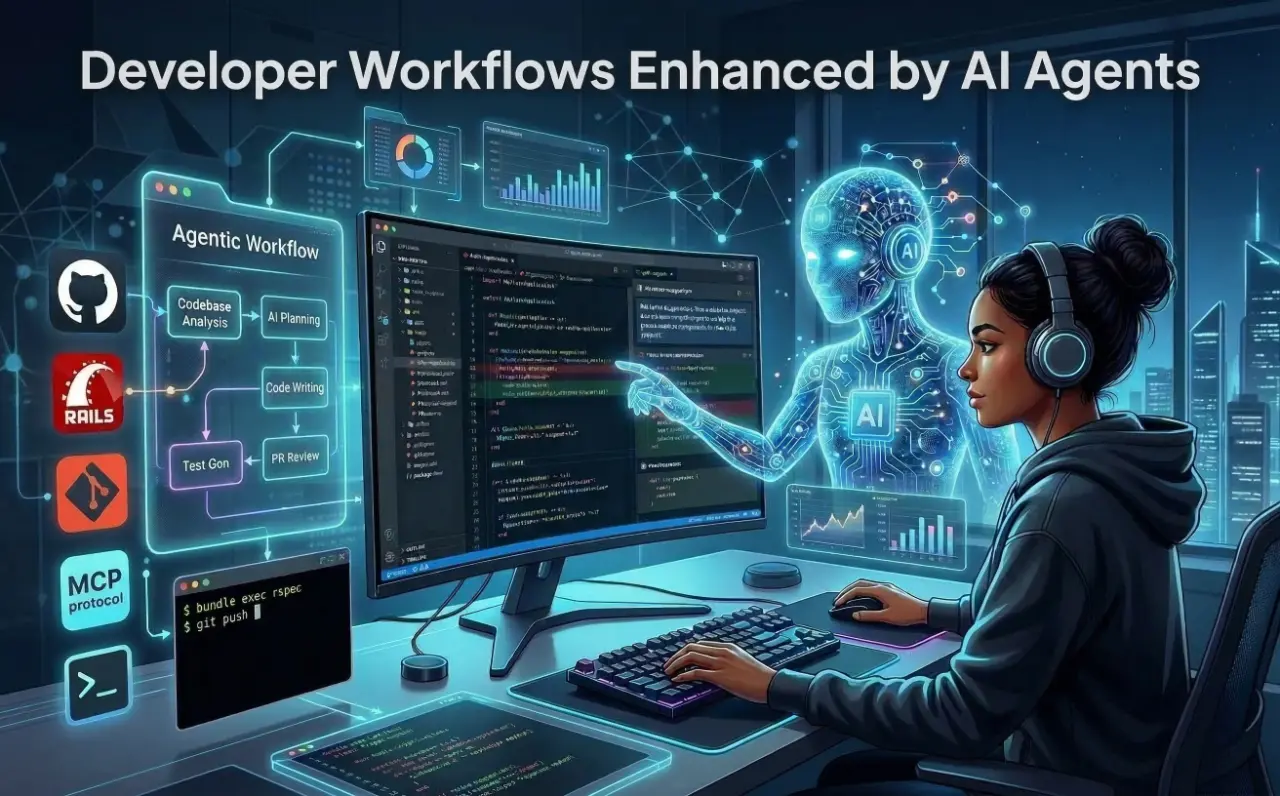
AI Is Moving from Prompts to Agents — How Developers Can Use an Agent-First Approach Like a Pro
We need to talk about the "Chatbot Plateau." The thrill of "AI coding" has worn off, replaced by the tedious reality of being a copy-paste middleman. This is where <b>Agent-First AI</b> enters the chat. The industry is moving away from "smart typewriters" (autocomplete) toward "digital interns" (agents). These tools don’t just predict text; they have access to your terminal, your file system, and a loop that lets them run commands, see errors, and fix their own mistakes.
Read More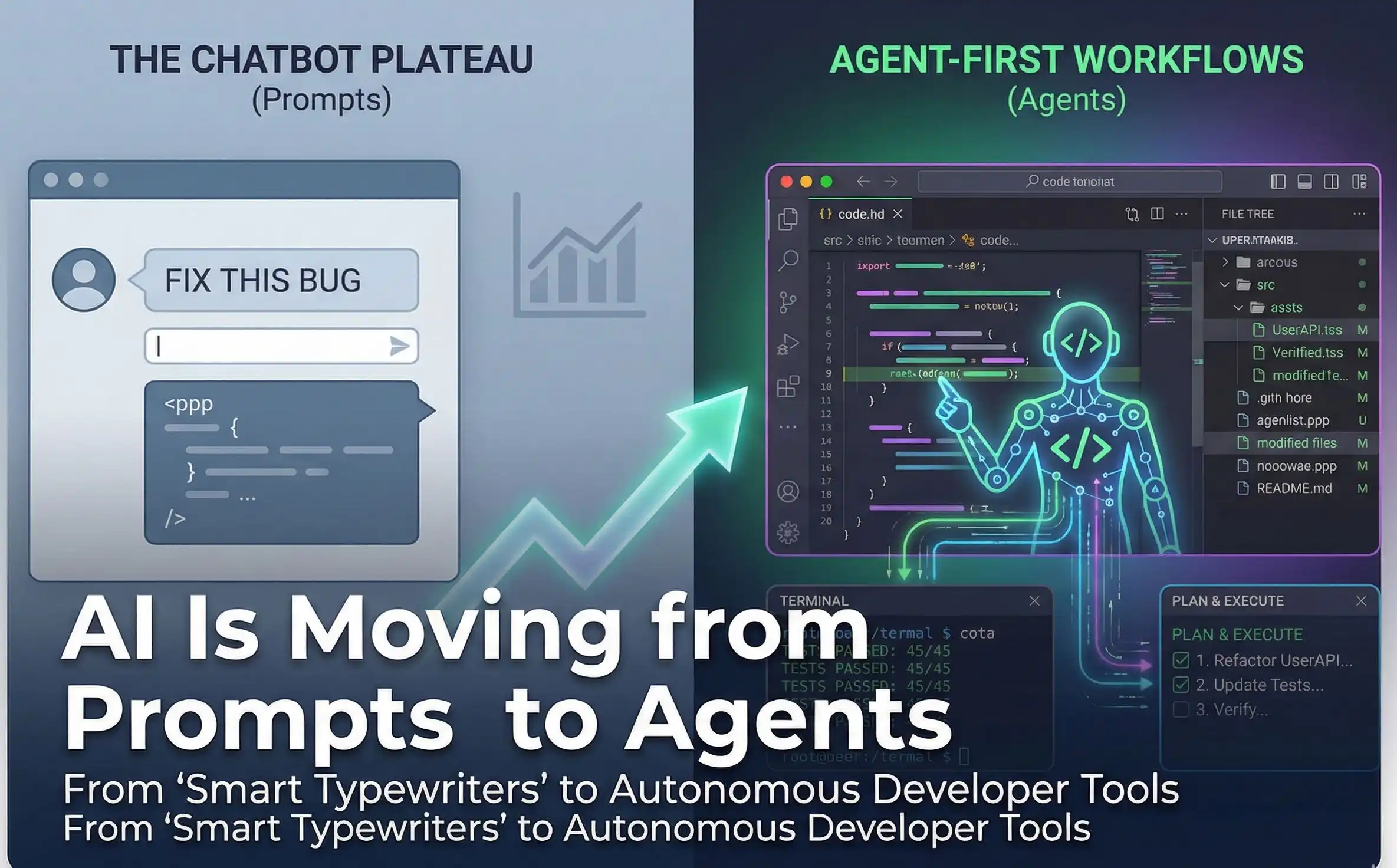
AI Is Moving from Prompts to Agents — and Most IDEs Are Still Playing Catch-Up
The landscape of AI coding tools is shifting from stateless chat prompts to context-aware agents. This article explores the 'Goldfish Memory' problem, compares leading tools like Cursor and Windsurf against traditional IDEs, and discusses the rise of 'Vibe Coding'.
Read More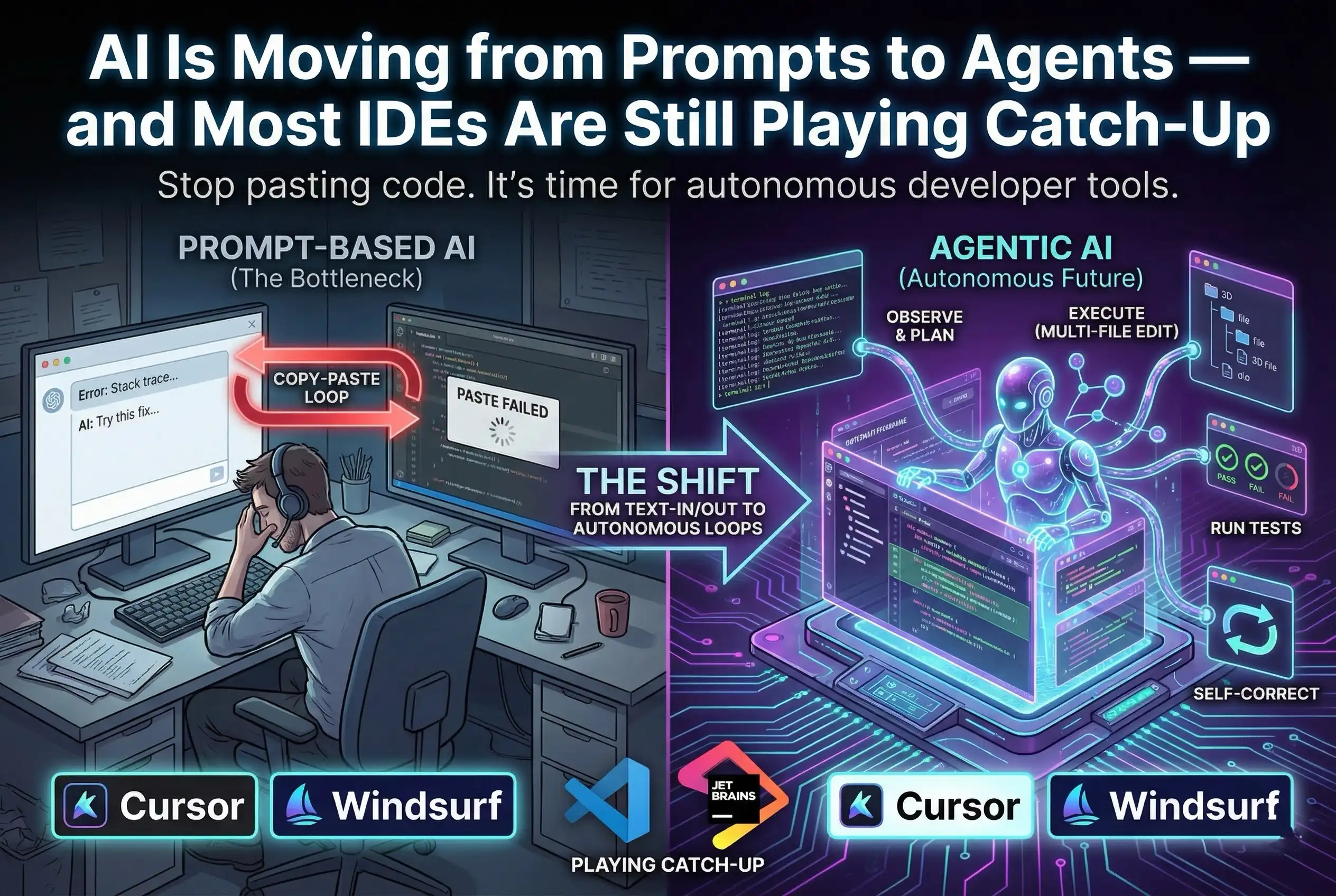
Stop Using a Hammer for Everything: The Right AI for the Right Job
In 2026, relying on a single "do-it-all" chatbot is like trying to build a house using only a Swiss Army knife. Sure, you could do it, but it’s going to be painful. The landscape has shifted from general chatbots to specialized "Agents"—tools designed to handle specific, complex workflows.<br/>Here is a breakdown of which AI tools are actually best for the different hats you wear during the work week.
Read More